•
BTS "ARIRANG" Comeback Triggers 3 Trillion Won Economic Surge and Shifts Seoul Tourism Trends
3 months ago•Rich Park
252
0
BTS's comeback has transformed Seoul into a "themed city," driving a projected 3 trillion won (~$2.3B USD) economic effect. This activity reveals a shift where young global fans prioritize "experience-based" districts like Seongsu-dong over traditional hubs [2][3].
Summary
| Event | Detail |
|---|---|
| Concert | "BTS THE COMEBACK LIVE |
| Attendance | 260,000 on-site; 1.18 million live viewers on Netflix [4][5] |
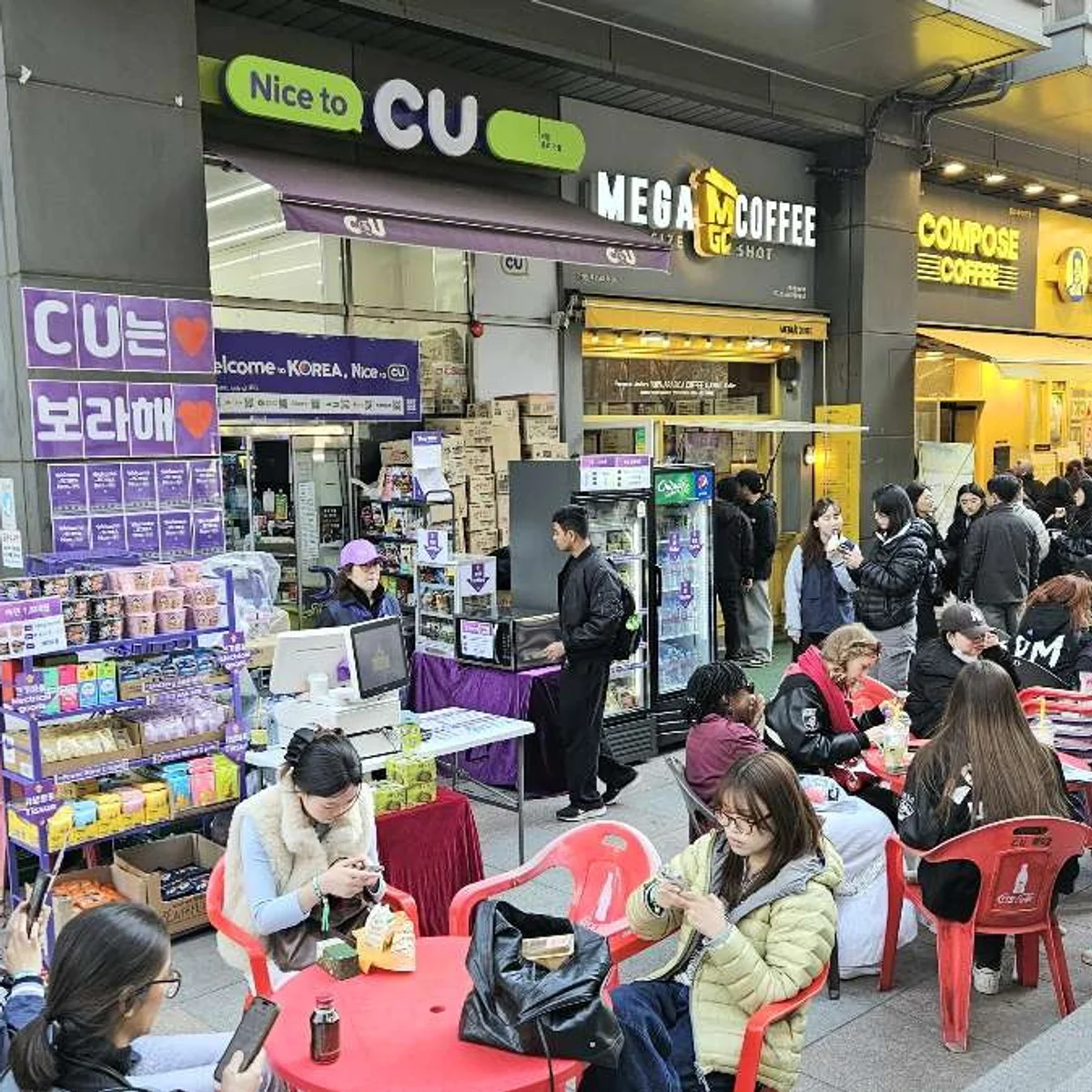
| Retail Impact | CU sales jumped 6.5x; Hazzys Myeongdong sales rose 3.2x via purple marketing [3] |
| Accommodation | Gwanghwamun hotel rates quadrupled to 800,000 won (~$615 USD) per night [7] |
Key Facts
- Securities analysts estimate the total economic impact, including albums and merchandise, at 3 trillion won (~$2.3B USD) [3].
- While crowds concentrated in Myeong-dong, the growth rate of foreign consumption was higher in Seongsu-dong, an "experience-based" district favored by younger generations [1].
- Mobilization was global and national: 63.6% of visitors used English as their primary mobile language, while 25.4% of the on-site audience traveled from domestic cities like Busan and Daegu [5].
- Search volumes for Goyang accommodations exploded 185-fold due to the "BTS effect" [1].
- Major brands capitalized on the "purple" theme: Starbucks and Hollys released purple drinks, while Paul Bassett sold limited-edition lavender ice cream [3].
- Netflix saw a 56.6% increase in Daily Active Users (DAU) and a 353.8% surge in new installations on the performance day [5].
- Digital "super fans" (93% female) used fashion apps 29% more and SNS 206% more than the average user [5].
Key Terms
- Experience-based commercial district: Areas like Seongsu-dong combining local brands, pop-ups, and exhibitions for unique cultural interaction [1].
- The City Arirang: A project with partners like Compose Coffee and Ourhome to market products along visitor routes [3].
- Online Super Fandom: Core users interacting with artists via specific platforms like Weverse (10+ times/month), Netflix, and NOL Ticket [4].
Key Quote
"As the structure where K-pop fandom leads directly to visits to Korea and consumption has gradually solidified, the influence of specific artists' activities on the retail market is also growing." — , Daum [3]